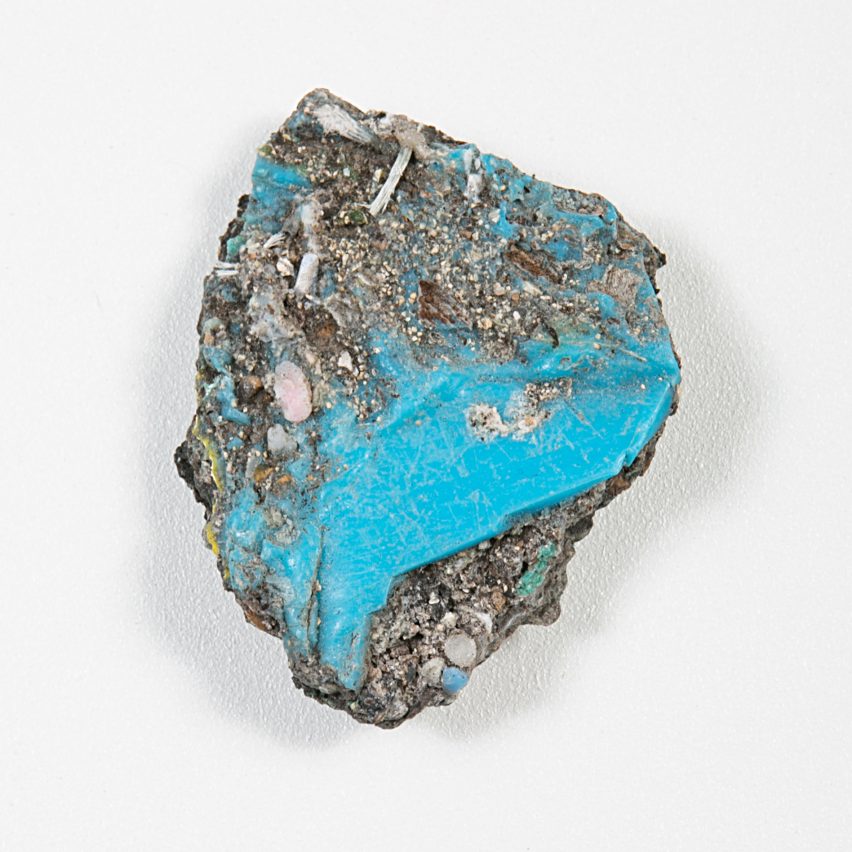
Kelly Jazvac is showing pieces of plastiglomerate at the Milan Triennale, a "warning sign" material that is a mix of molten plastic debris and beach sediment.
Plastiglomerate is the result of plastic litter melting and merging with the surrounding rocks, shells, sand and other debris to form a lumpen solid sediment flecked with colour.
The rock-plastic hybrid material is seen as an example of the effects of the anthropocene, a proposed new geological era where human impact is the dominant force on the earth's natural materials.
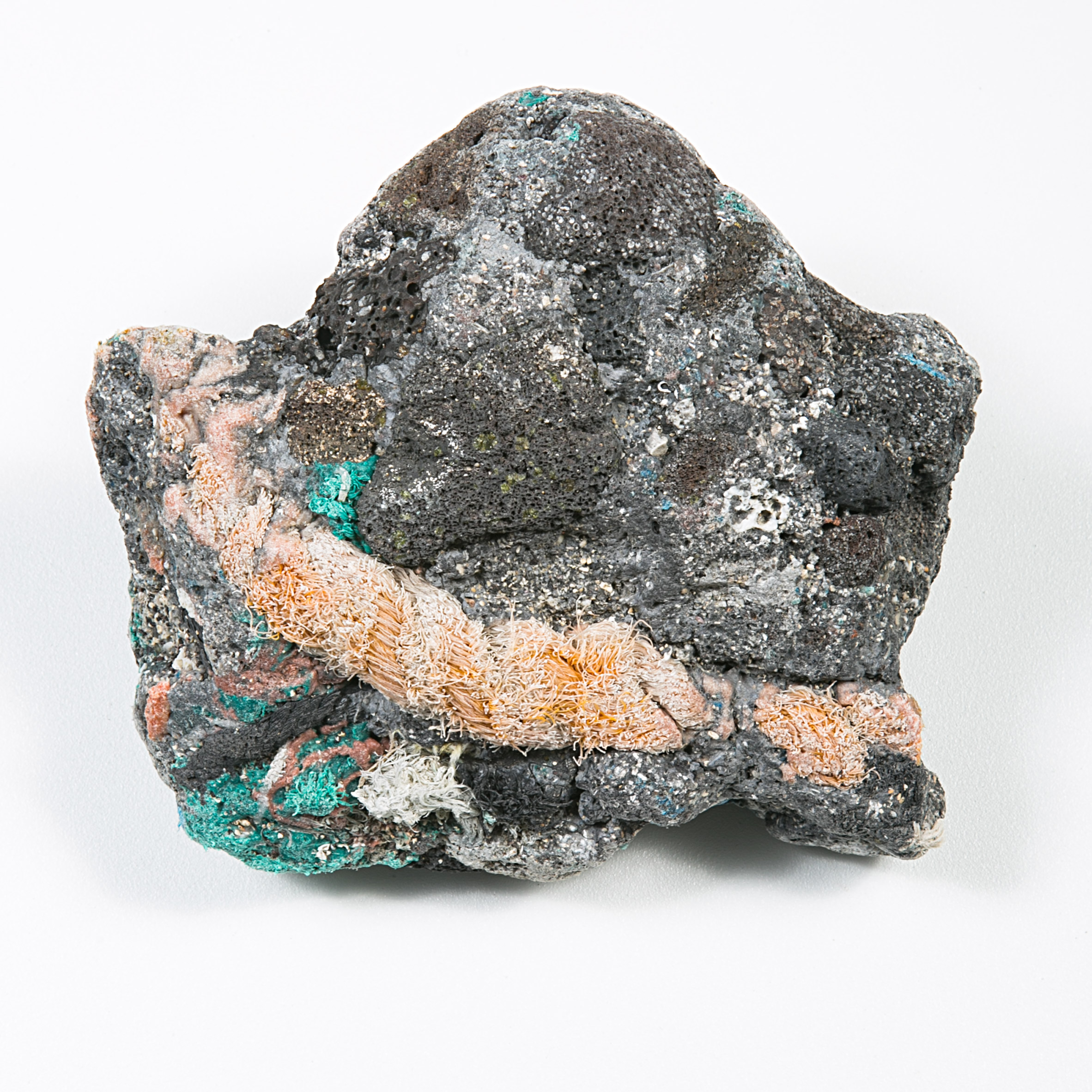
"I think it is important to show them because of the warning signs they indicate and the curiosity they generate. I find them beautiful and horrific at the same time," Jazvac told Dezeen.
The found shards of the material are on display as readymade objects as part of the major exhibition at this year's Milan Triennale titled Broken Nature: Design Takes On Human Survival.
Curated by Paola Antonelli, the exhibition seeks to examine humankind's fractured relationship with the natural world and its resources, as well as what can be done to reverse the damage.
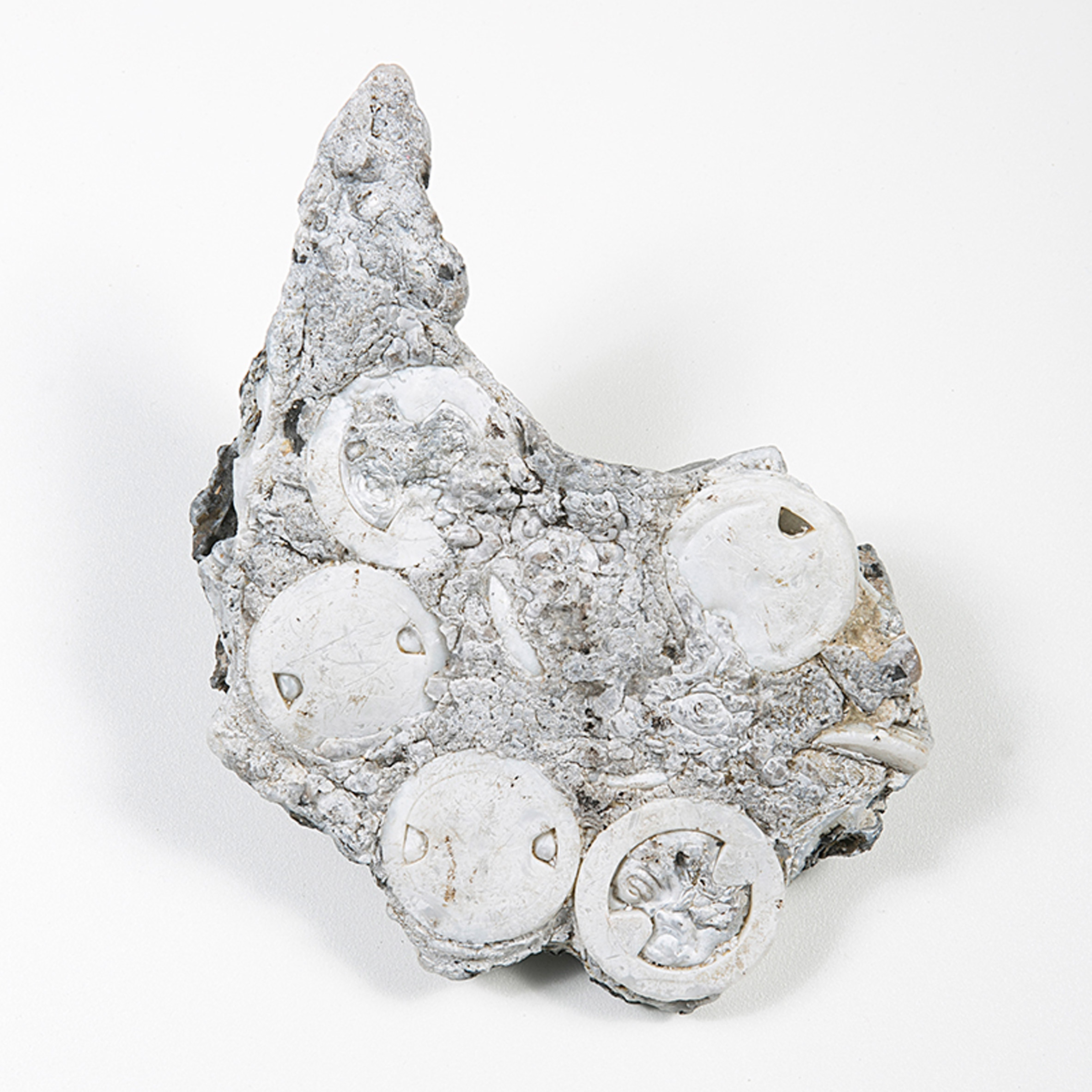
Chunks of the material were first discovered in 2006 by oceanographer Charles Moore on Kamilo Beach, a polluted area of sand in Hawaii, but at that point the material had no name.
The name plastiglomerate was attributed to the material by Jazvac, Moore and Patricia Corcoran, an earth scientist at Western University in Ontario, Canada, who are all interested in plastic pollution and its effects on the environment.
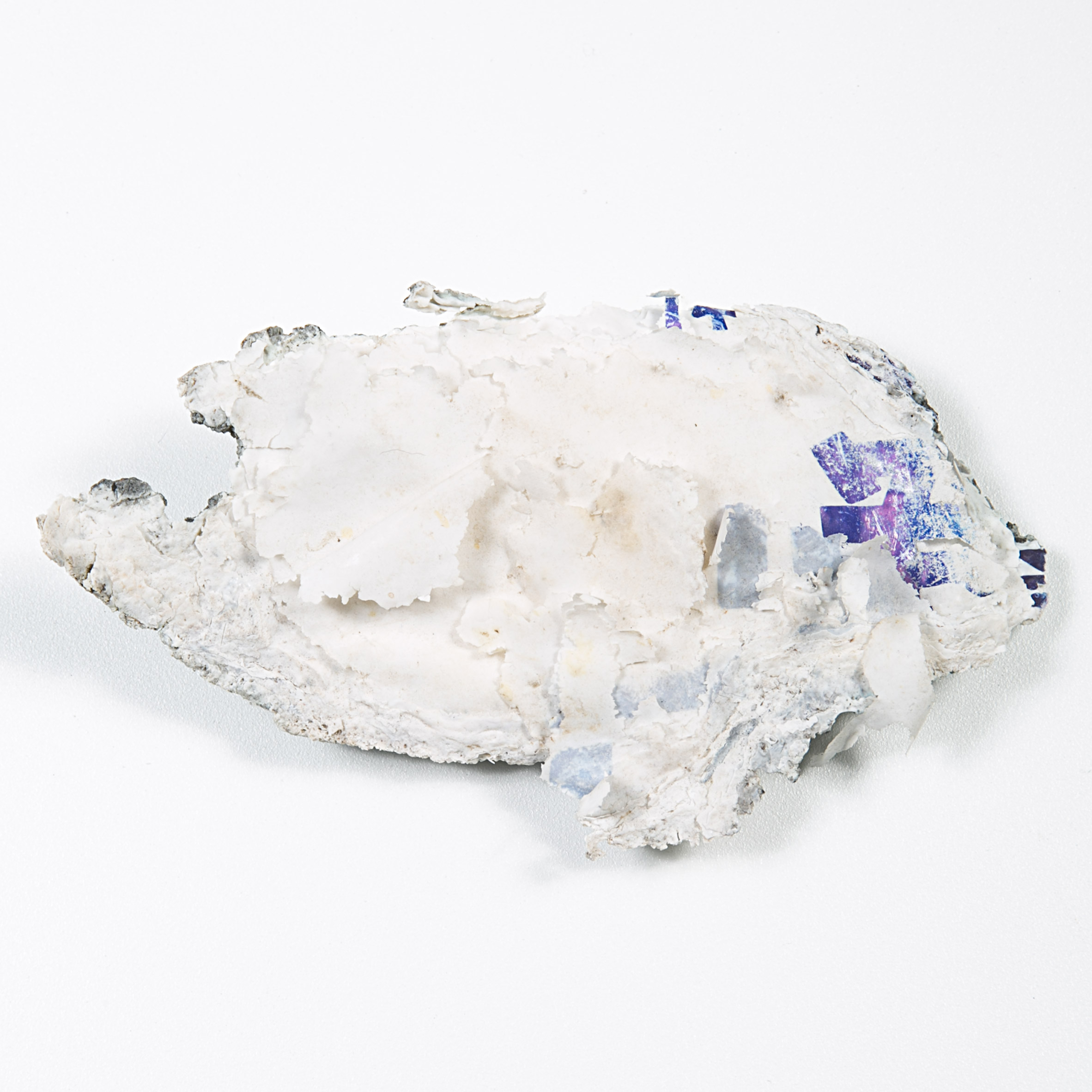
"I'm interested in how [the pieces of plastiglomerate] act as both scientific and cultural evidence of environmental contamination, and the ways in which they physically embody cycles of production, consumption, and disposal," said Jazvac.
"It's the story of a whole system captured in a not-so-natural stone. A long-lasting stone that will be a part of the earth's future."
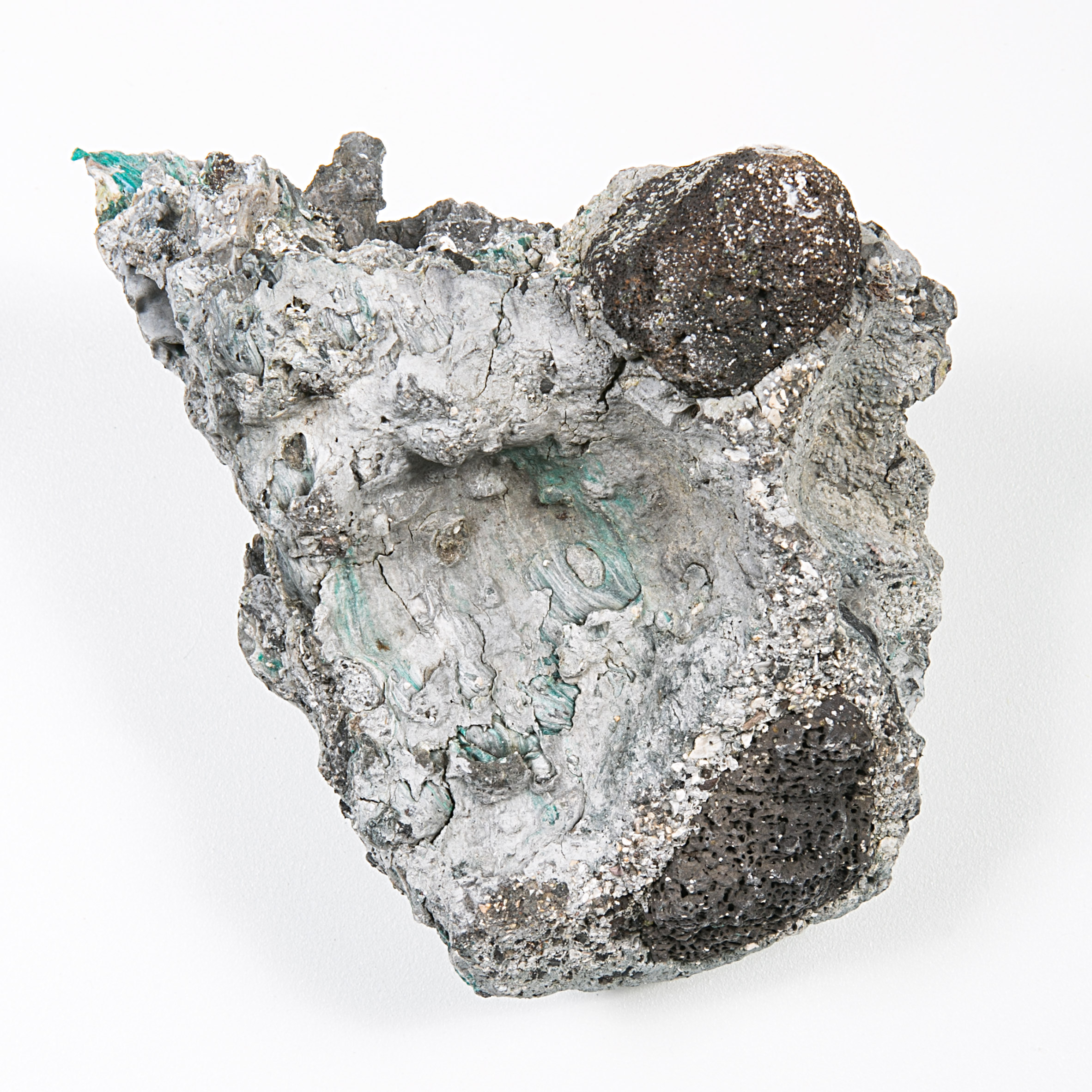
Jazvac hopes that by exhibiting the plastiglomerate objects, visitors will reflect on the conditions that led to their existence.
"When shown in this way, as artworks and artefacts, I think they will prompt viewers to ask important questions about all the conditions and processes that led to their existence," she said.
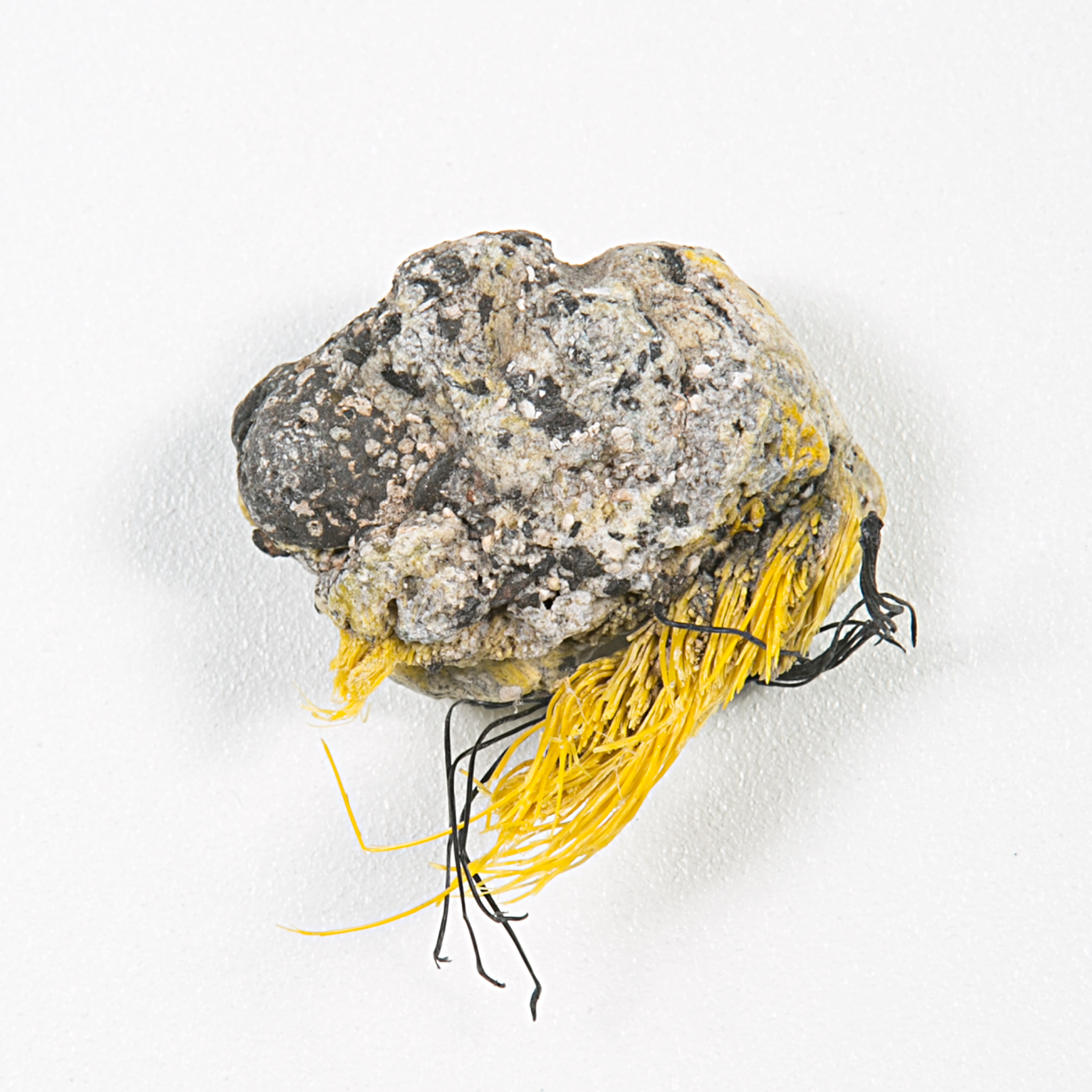
"Some evidence of environmental damage is so horrible that it can be very hard for people to consider it carefully," said Jazvac.
"I hope these objects can act as a bridge, and fight harmful delusions about environmental contamination and climate change."
Other projects exploring the anthropocene era include three household objects by Yesenia Thibault-Picazo and an installation that explores the effects of chemical waste dumping by Xandra van der Eijk.
The post Kelly Jazvac presents "beautiful and horrific" plastiglomerate objects at Milan Triennale appeared first on Dezeen.
http://bit.ly/2vfizGA
twitter.com/3novicesindia


No comments:
Post a Comment