Brisbane-based artist Michael Candy has proposed a method of artificially pollinating bees using 3D-printed robotic flowers, in hopes of improving the insects' population.
The Synthetic Polleniser is made up of a system of robotic flowers installed among real fauna.
A conceptual project, it was devised by Candy in response to the depleting bee population. The artist hopes it will raise awareness of the flying insects as a "vital part of the ecosystem".
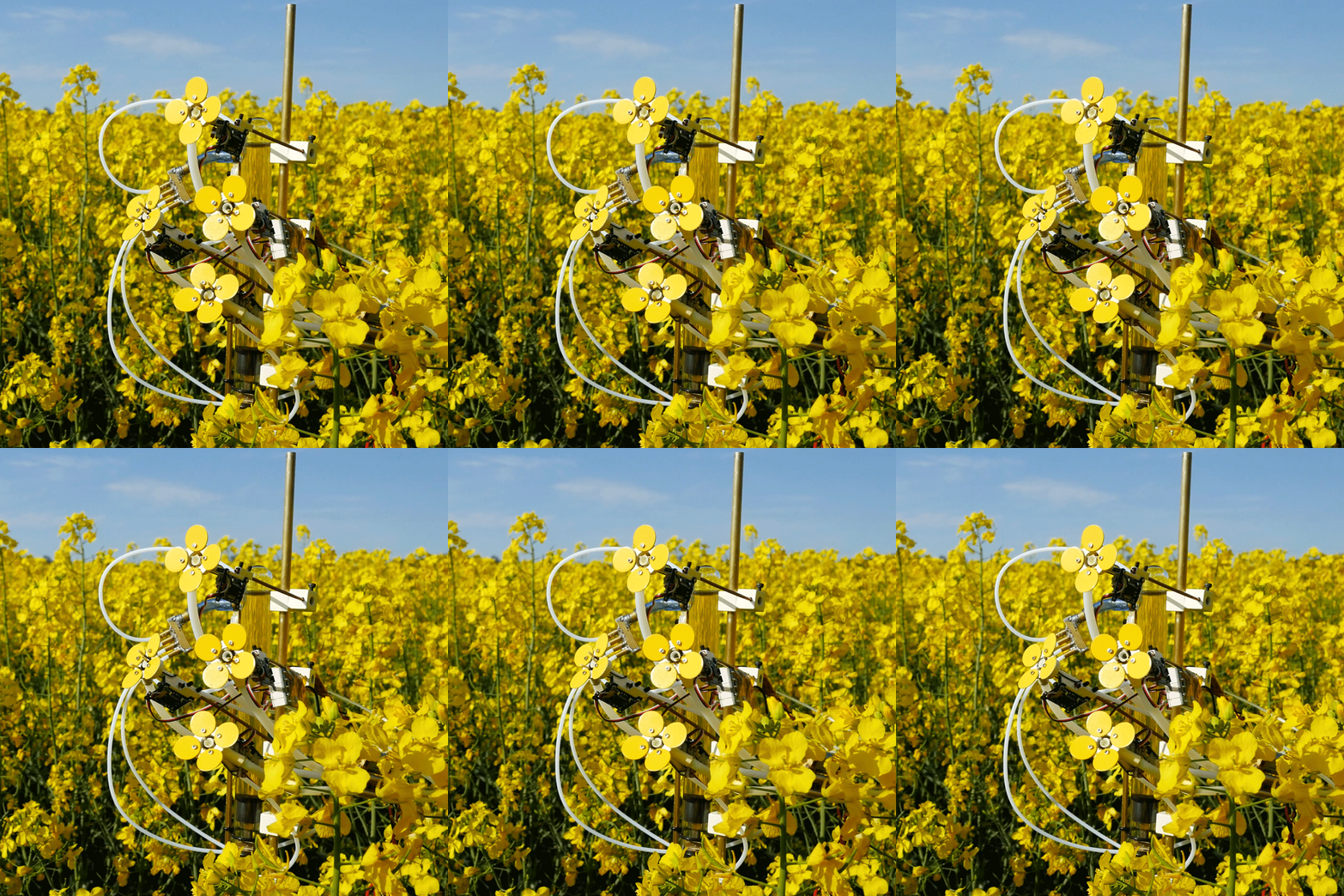
"Bees are a vital part of our ecosystem, I feel that everyone needs to take the time and get to know these hard workers that keep our plants and crops pollinated," Candy told Dezeen.
"It is common knowledge that bee population is suffering worldwide due to pesticides, climate change and Varroa mites – for these problems we can find solutions," he added.
His system proposes a solution in the form of robotic flowers, which are all equipped with pollen and nectar.
By placing the 3D-printed flowers in and amongst real plants, Candy hopes his design will also encourage bees to pollinate from the nearby fauna.
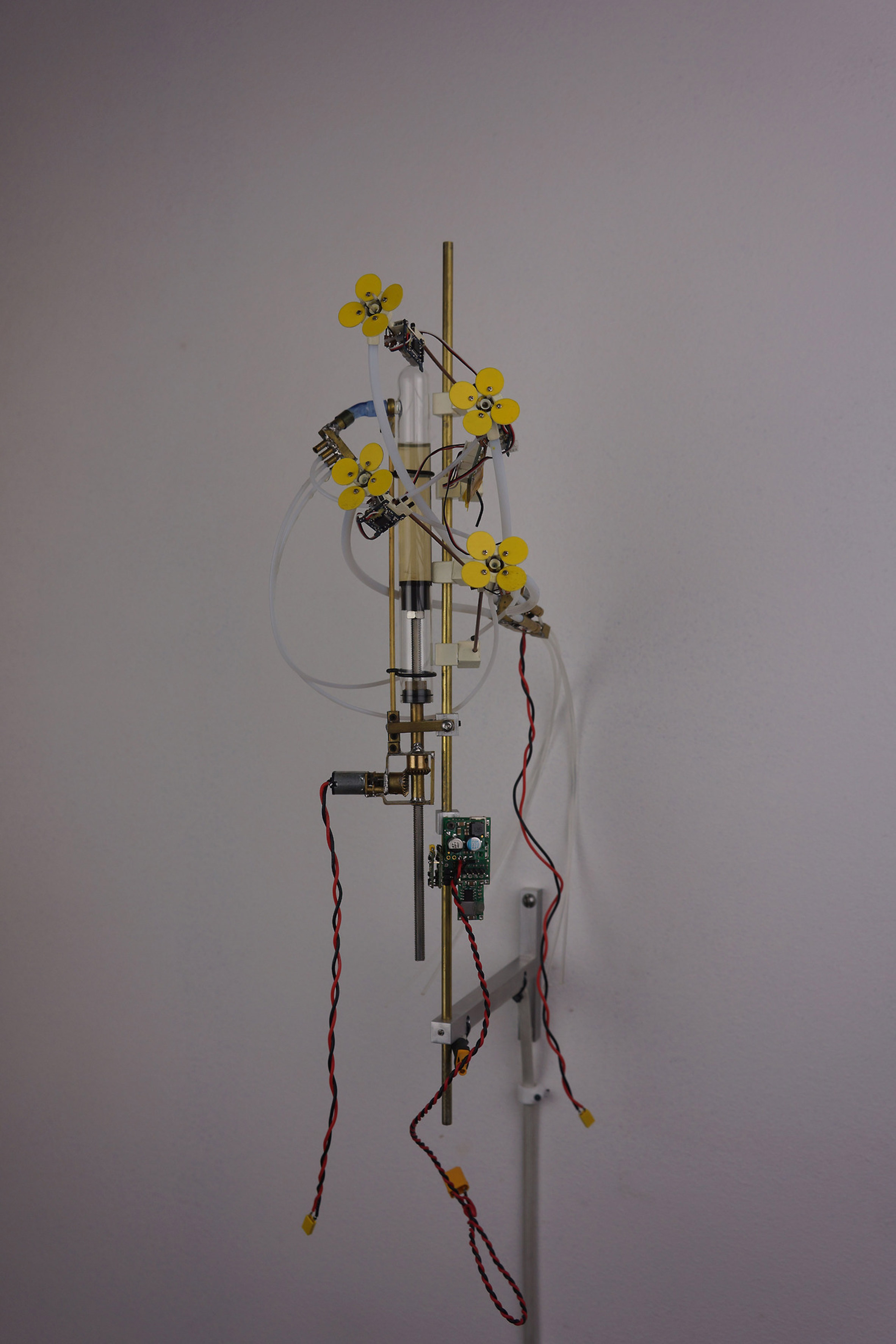
Each of the flowers features a synthetic stamen and 3D-printed petals based on those of the rapeseed species, which were designed in order to trick the bees into thinking they are real plants.
"It's taken several years to successfully coax bees into landing on the synthetic pollenisers," said Candy.
"The colour and form of the unit are important for attraction as bees have a variety of ways to identify flowers," he continued.
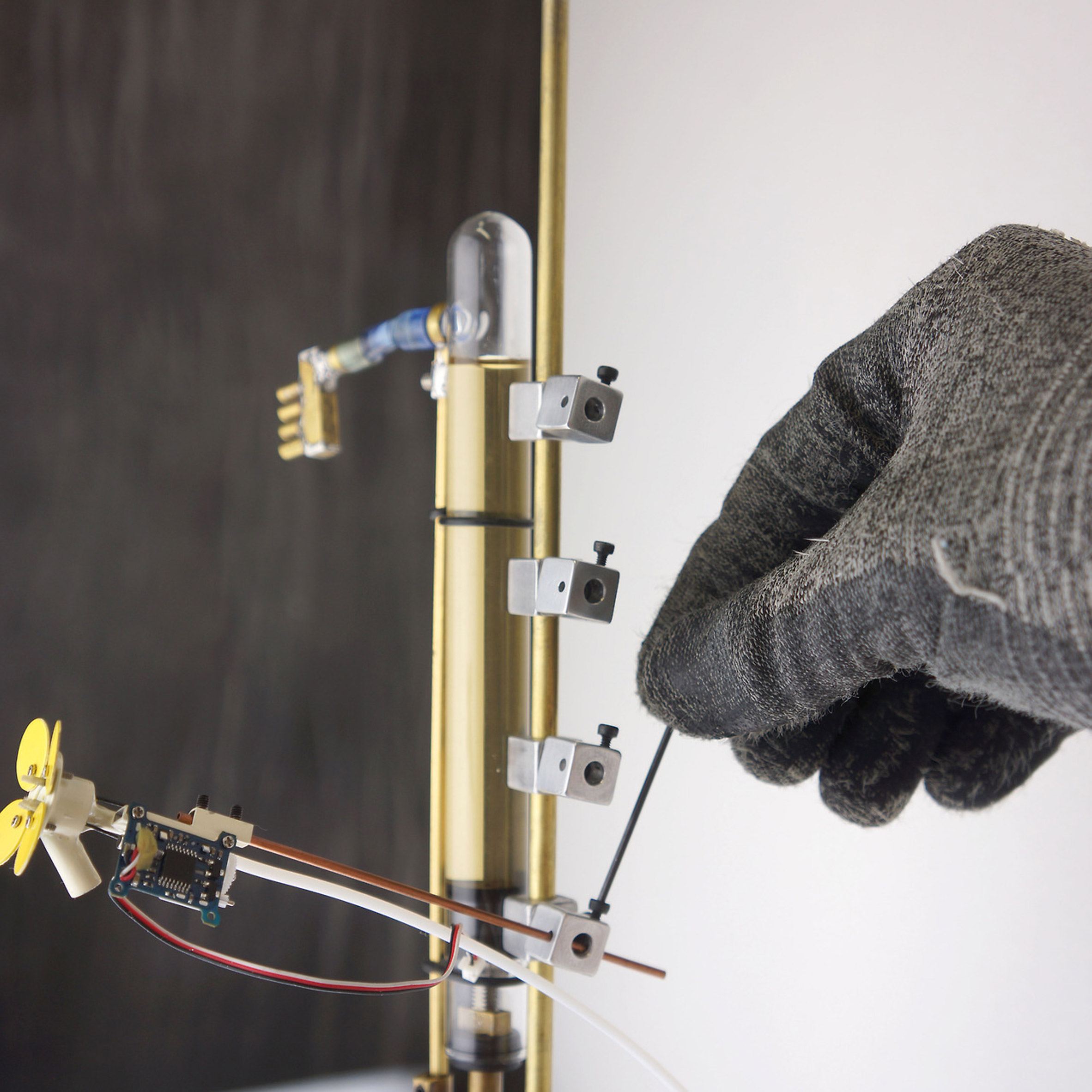
The flowers are connected to a complex network of motors and tubes, which push a man-made nectar solution to the surface of the flowers to attract the bees.
Pollen was collected by Candy from beehives using a pollen trap – a device that fits over the hive entrance that collects leftover pollen pellets from the hind legs of bees.
The pollen was then fed into a synthetic stamen – the part of the flower that contains the pollen at the end of its filaments – before being sent through the motors, which regulate the amount of pollen distributed to the flower.

Bees then pick up the pollen as they would from a normal flower.
"Bees are easily the most utilitarian pollinators used in industrial agriculture and they are suffering from a variety of environmental problems," said Candy.
"Perhaps in a future where designer crops are no longer able to produce pollen yet still receive it – then the Synthetic Pollenizer could rehabilitate the reproductive cycle of these genetically modified crops."
Designer and researcher Neri Oxman similarly sought to protect bees with her Synthetic Apiary room, which offers precise control of light, humidity and temperature to replicate the ideal environment for bees to survive and produce honey.
Italian designer Francesco Faccin designed a hive that maintains a constant temperature and shelters inhabitants from bad weather, while Norwegian studio Snøhetta created wooden apiaries to encourage bees to take up residence on the roof of an Oslo roof court.
The post Synthetic Polleniser could help depleting bee population appeared first on Dezeen.
http://ift.tt/2HtX6Pd
twitter.com/3novicesindia


No comments:
Post a Comment